
Questions, answered
A practical question library for caffeine pouch buyers and product teams.
Discuss your briefFind the question behind your brief
120 original answers cover product basics, caffeine, comfort, formula, pouch engineering, flavors, cans, samples, quality, market review and related products. Use them to prepare a better development brief; finished-product directions and destination requirements still need their own review.
120 answers
The answer library
What is a caffeine energy pouch?
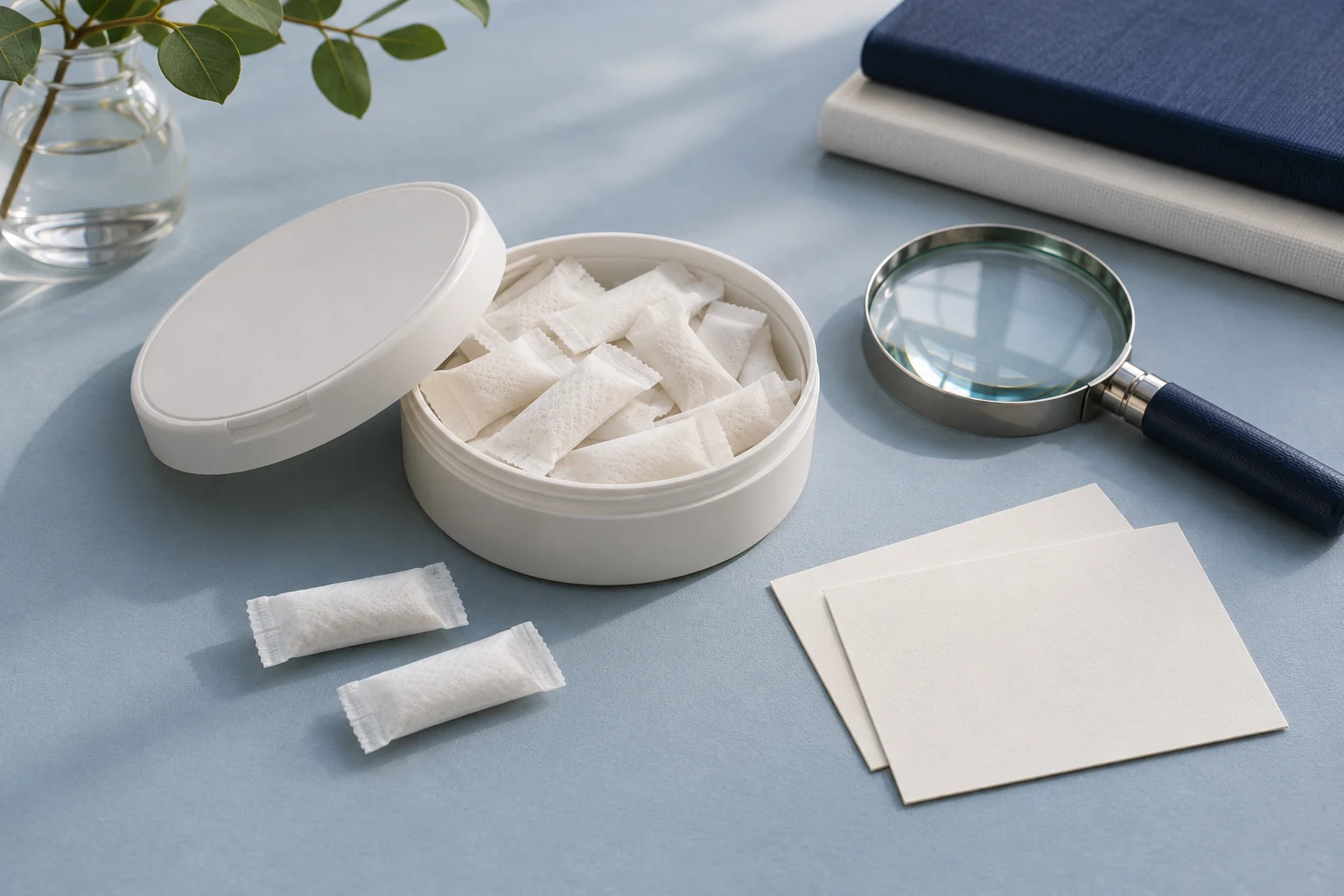
It is a small fiber pouch containing a caffeine formulation, used between the lip and gum according to its finished label. The pouch material is removed after use. It is a different product format from a drink, tablet, gum or nicotine pouch.
Does caffeine-free mean nicotine-free?
These describe different ingredients. A nicotine-free caffeine pouch can still contain caffeine. A caffeine-free functional pouch needs its own formulation review. Check both the ingredient specification and the finished-product testing scope before making either claim.
Are caffeine pouches the same as snus?
No. Traditional snus contains tobacco. This project focuses on nicotine-free, tobacco-free caffeine formulations. A familiar round can or slim pouch shape does not establish ingredient content, legal category or safety.
Do caffeine pouches dissolve?
The fiber pouch is normally designed to stay intact and be removed. Flavor and soluble ingredients can release while the outer material remains. A pouch looking similar after use does not measure its caffeine release.
Can the pouch itself be swallowed?
Use the finished label and do not intentionally swallow the pouch. Packaging should make removal and disposal clear. If accidental ingestion or symptoms cause concern, seek prompt professional advice and retain the product label.
Do users have to spit?
Instructions depend on the finished formula and its evaluated use. Avoid borrowing spit-free claims from another brand or format. The brand must approve clear handling, removal and disposal directions before release.
Can a caffeine pouch replace a nicotine cessation treatment?
It is not an established smoking or nicotine cessation treatment. Nicotine-free describes composition and should not be turned into a claim that the product treats dependence or prevents withdrawal.
Is a pouch safer because it contains no nicotine?
Removing nicotine does not resolve caffeine exposure, oral tolerance, ingredient suitability or packaging risks. A finished product needs its own review. Avoid broad harmless, risk-free or gum-safe claims.
Who is this website for?
The site serves adult-market brand owners, distributors and importers evaluating OEM/ODM development. It supplies product and procurement information, rather than personalized consumption advice or retail medical recommendations.
Why do similar-looking pouches feel different?
Pouch fabric, fill weight, moisture, flavor load, cooling system, acidity and seam geometry all affect the experience. Compare documented samples of the final formula instead of judging a pouch by can appearance.
Which caffeine levels can be discussed?
The supplied project brief supports discussion of 50, 80 and 100 mg per pouch and other reviewed levels, with a manufacturing maximum of 150 mg per pouch; amounts above 150 mg cannot be manufactured. Final feasibility and destination review still apply.
Does a 100 mg label mean 100 mg reaches the bloodstream?
No. Added content, measured content, release into a test medium and human absorption are different quantities. An assay can establish caffeine content without demonstrating how much an individual absorbs during use.
Can I compare the caffeine with a cup of coffee?
Compare declared milligrams, with the serving definition stated. Coffee caffeine varies by preparation and portion. A milligram comparison does not prove equal onset, exposure, effect or user experience across formats.
Can consumers combine a pouch with coffee or an energy drink?
All caffeine sources contribute to total intake. Product directions should address cumulative exposure and appropriate warnings. A manufacturer should not imply that a second format creates a separate caffeine allowance.
What does the FDA adult caffeine figure mean for product design?
FDA consumer guidance discusses 400 mg per day as an amount not generally associated with negative effects for most adults. That is general context, not a recommended pouch dose, a target intake or approval of this product.
Does natural caffeine eliminate side effects?
Plant origin does not remove caffeine's effects or individual sensitivity. A botanical formulation also needs extract identity, caffeine standardization and contaminant review. Natural should describe a supported source claim, not a promise of safety.
How is caffeine from guarana counted?
Use the extract's measured caffeine percentage and include every other caffeine source. For example, 100 mg of an extract standardized to 20% caffeine contributes 20 mg of caffeine before other sources are added.
Can a formula guarantee no crash or jitters?
A manufacturer cannot support that guarantee from an ingredient list. Individual response, total exposure and sleep vary. Claims about a finished formula need appropriate evidence and destination-market review.
Does L-theanine cancel caffeine-related anxiety?
Do not claim that adding L-theanine neutralizes caffeine risks. Ingredient pairing is a development option, and a ratio alone does not establish clinical benefit or suitability for an individual.
Why should a low-dose SKU have a separate specification?
A different caffeine amount changes the formula, mixing targets, assay acceptance and label. Treat dose variants as distinct SKUs unless the project agreement explicitly defines another control approach.
Is burning or gum peeling a sign the pouch is working?
No. Burning, peeling, sores or persistent pain should not be promoted as a normal performance signal. Stop use and seek dental or medical advice when symptoms persist or are concerning. Record the batch and formula for investigation.
Can a formula be guaranteed not to irritate gums?
No universal guarantee is justified. Evaluate the actual pouch material, seam, moisture, acidity and flavor system. Sensory testing can identify issues without proving that every consumer will tolerate the product.
How long should a pouch stay in place?
The finished product requires its own evaluated instructions. Do not copy a duration from a nicotine brand or infer it from flavor persistence. A development brief should define the intended use window before testing.
Can a pouch be used while sleeping?
Do not design consumer instructions around use during sleep. Safe handling and removal must be considered. A product with a sleep-related ingredient still needs a use pattern that addresses the physical pouch.
Does a stronger cooling sensation mean more caffeine?
Cooling perception comes from the flavor system and is not a caffeine assay. Separate cooling intensity from caffeine content on the brief and label so consumers are not encouraged to interpret irritation as strength.
Why might a pouch taste bitter?
Caffeine, botanical extracts and some companion ingredients can contribute bitterness. Masking changes sweetness and mouthfeel, so evaluate the complete formula after processing and storage, rather than tasting one ingredient in water.
Can we develop a gentler mint profile?
Yes, mint character, cooling intensity, sweetness and moisture can be reviewed as separate development variables. Use comparative samples and a written sensory scorecard. A gentler profile must not be described as clinically gum-safe.
Should a consumer reuse a spent pouch?
Do not encourage reuse. Remaining flavor does not establish remaining caffeine, hygiene or pouch integrity. The finished instructions should specify one-time handling and appropriate disposal.
Can caffeine pouches prevent tired driving?
They must not be presented as a substitute for rest or a treatment for drowsiness. Avoid road-safety guarantees and language that encourages adults to continue driving while sleepy.
Are these products appropriate for children?
The business program is intended for adult-market products. Branding, serving instructions and packaging should avoid encouraging child use, and market-specific restrictions and warnings need review. A candy-like shape does not change caffeine exposure.
What information starts a custom formula?
Provide the destination, ingredient targets per pouch, caffeine sources, preferred flavor, sweetness, cooling, pouch size, moisture and pack count. Include ingredients or claims to avoid and any required analytical documents.
Can we develop a caffeine-only formula?
A caffeine-focused formulation can be discussed without adding a long list of functional ingredients. The carrier, flavor and stability system still need development, and the final ingredient list must disclose the actual composition.
Can B vitamins be added?
They are a development option subject to permitted forms, amounts, compatibility, stability and label review. More ingredients can reduce available fill space and introduce additional assay and labeling requirements.
Can different botanicals share one caffeine specification?
Only when every caffeine source is identified and controlled. Guarana, coffee and tea extracts can vary in caffeine concentration. Specify each raw material and the finished total, rather than relying on an extract's name.
Does a plant extract automatically count as clean label?
Clean label has no single universal technical definition. State the actual ingredient, source and processing information that can be supported, and agree with the customer what exclusions or declarations matter.
How are allergens handled in flavor development?
Review the complete flavor system, carriers, processing aids and cross-contact controls. A flavor name such as latte or coconut does not establish its allergen status. Obtain the relevant supplier declarations and finished-label review.
Can a sugar-free claim be used for every flavor?
No. Check the finished composition and destination rules. Sweeteners, fruit powders, flavor carriers and nutrition calculations may differ across SKUs. A claim approved for one formula should not be automatically copied to another.
Can vegan suitability be assessed?
Review ingredient origins, flavor carriers, processing aids and any applicable cross-contact requirements. Document the exact declaration or certification being requested; do not infer vegan suitability from the fiber pouch alone.
Why can a high active load affect the pouch size?
Active ingredients occupy space and can change bulk density, moisture behavior and flow. The target dose must fit with the carrier and flavor system while allowing a sound seal and acceptable mouthfeel.
Can we claim controlled or sustained release?
Only with suitable finished-product evidence and a clear definition of the claim. A botanical source or a general encapsulation concept does not establish a release profile for the finished pouch.
Can we choose a slim pouch?
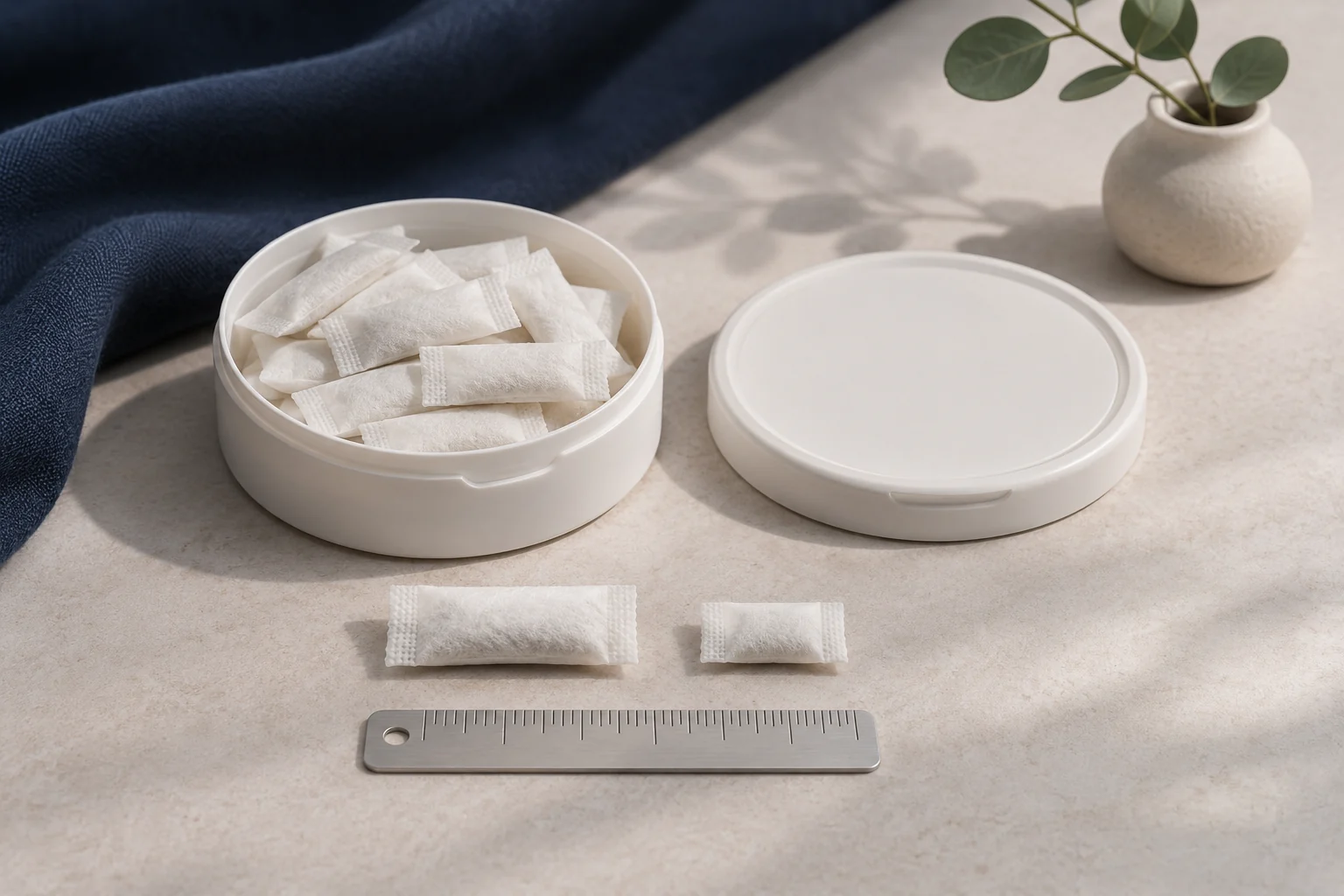
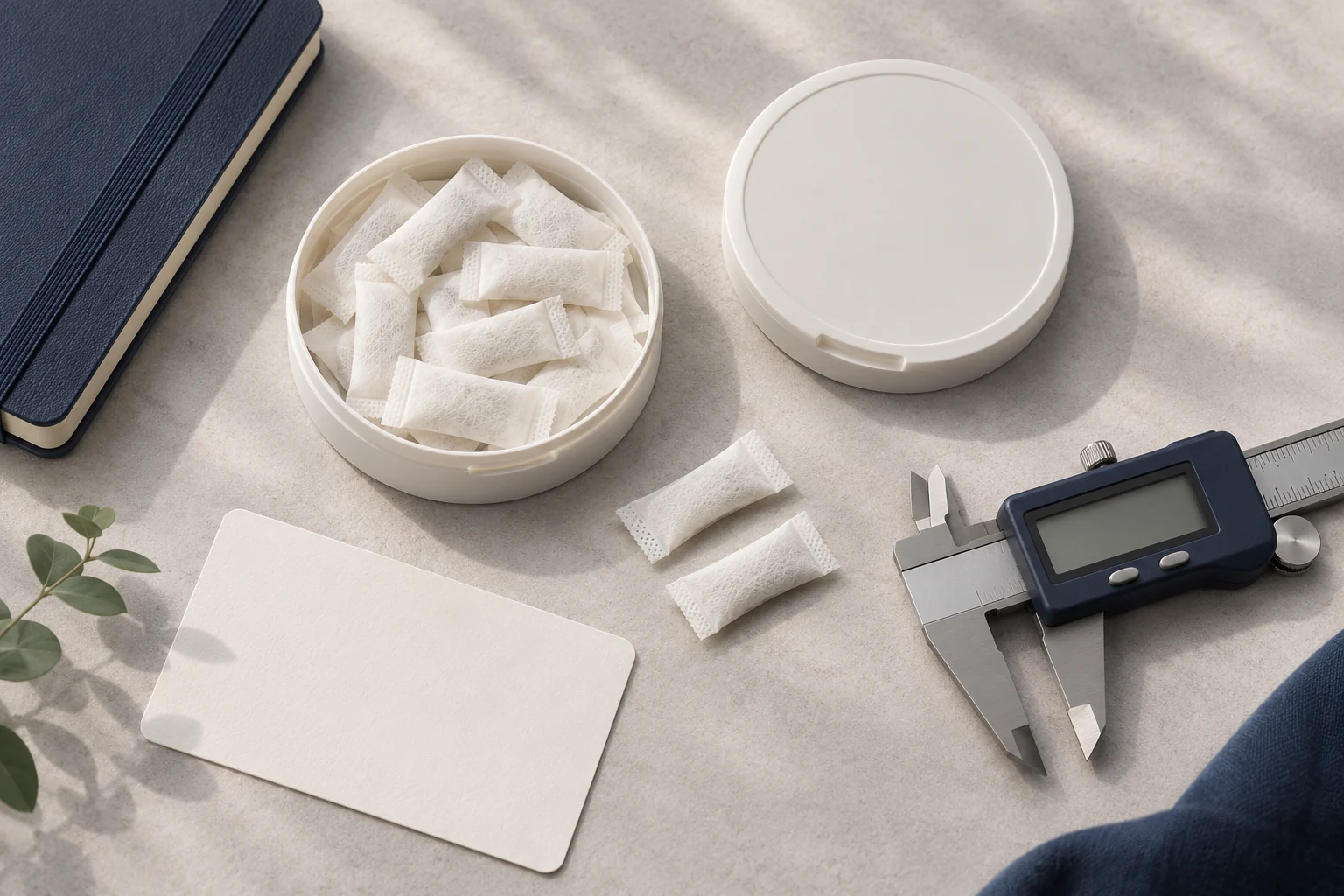
Slim is an available development direction in the supplied product brief. Confirm length, width, filled thickness and weight against the actual formula and can, then approve samples before production.
Can mini and larger pouch formats both be evaluated?
Yes, subject to material and production feasibility. A smaller pouch changes fill space, contact area and sealing conditions. Mini is a format description, not a guarantee of lower caffeine content.
What is the difference between pouch weight and caffeine weight?
Pouch fill weight includes the full mixture. Caffeine content is one component and should be specified separately in milligrams per pouch. Include the outer material only if the chosen weight definition expressly requires it.
Can dry and moist pouches use the same formula?
A moisture change can alter processing, flavor release, microbial control and storage behavior. Treat it as a formula development variable and confirm the finished specification rather than assuming a direct conversion.
Is an ultrasonic seam always better than a pressed seam?
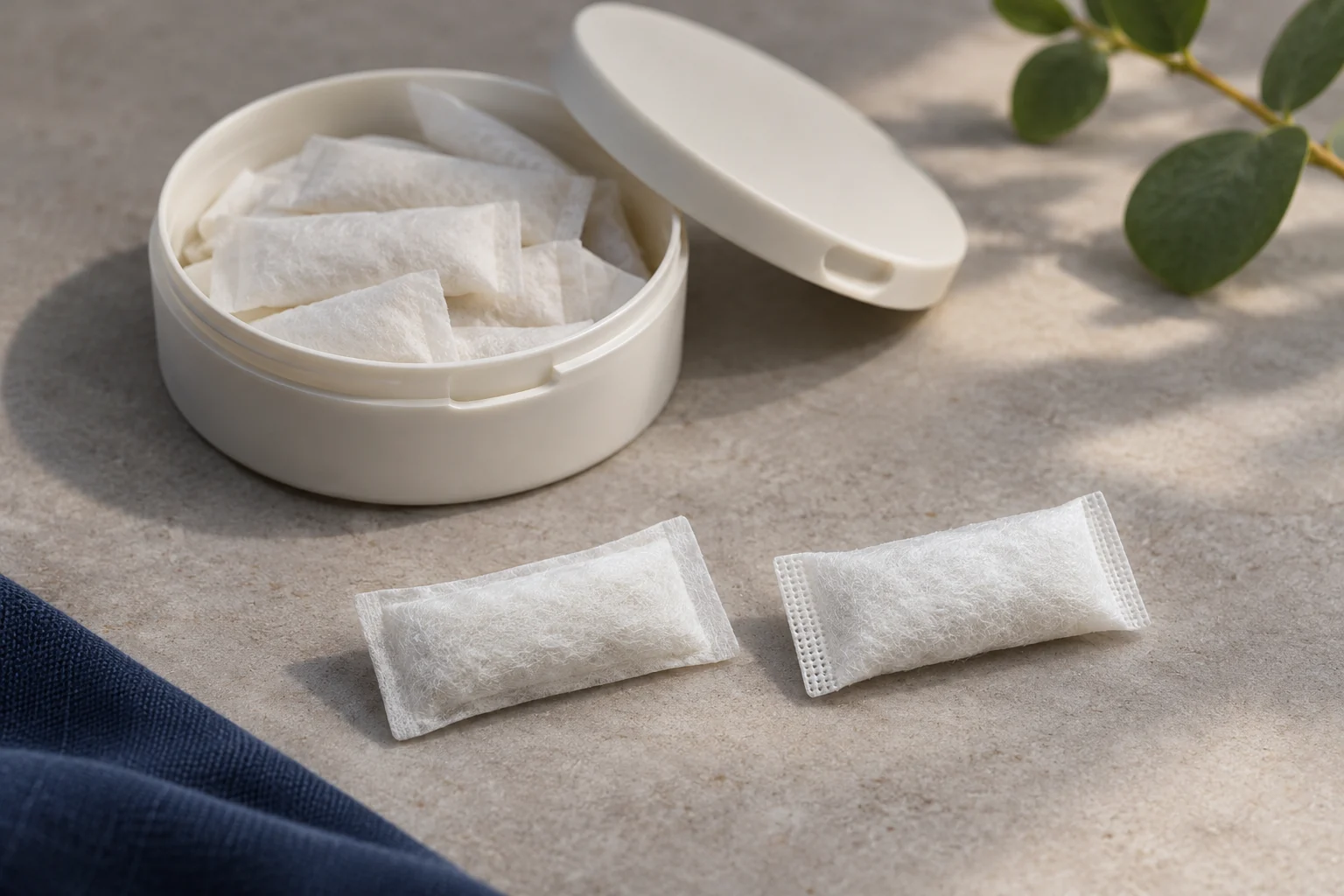
The suitable process depends on the fabric, fill and equipment. Compare seal integrity, loose particles, seam feel and repeatability under the intended process. The process name by itself does not establish quality.
What should a pouch leak investigation record?
Record batch, fabric lot, seal settings, fill weight, moisture, damage location and handling conditions. Preserve samples and photos. Distinguish an incomplete seam from a tear caused during packing or use.
Can loose powder on a pouch be assessed?
Yes. Set a defined inspection method and acceptance criteria for surface residue and leakage. Check the filling and sealing process alongside fabric and formula behavior, rather than relying only on a visual impression.
Why does a seam feel stiff?
Bond width, material structure, compression and thermal history can change seam stiffness. Inspect the actual sample and compare several settings while checking that a softer result still meets the integrity requirement.
What pouch material documents are useful?
Request the material specification, composition, suitability declarations for intended food contact where applicable, supplier identity and lot traceability. Testing and declarations must match the intended exposure and destination requirements.
Can a pouch be called biodegradable or plastic-free?
Those claims require evidence for the complete relevant material under stated conditions. Fiber appearance is not proof. Include binders, fibers, inks and packaging components in the scope before making environmental statements.
How many flavor directions are in the supplied menu?
The supplied menu contains 91 named flavor directions, grouped for browsing. These are commonly developed options, and compatibility with the selected active formula, label and destination is confirmed through the project.
Can two flavors be blended into one SKU?
A combined flavor such as strawberry-watermelon can be evaluated as its own SKU. Agree its formula, sensory target and label separately; combining names does not establish that an approved formula already exists.
Does a coffee flavor always contain coffee-derived caffeine?
No. Flavor character and caffeine source are separate decisions. A coffee-style flavor may use a different caffeine source, while a coffee extract can contribute caffeine even when the final flavor is not strongly coffee-like.
Can we avoid a strong sweet aftertaste?
Compare the sweetener blend, concentration, bitterness masking and intended use duration. A lower sweetness target may expose bitterness. Test the complete sample and record both initial taste and aftertaste.
How should mint samples be compared?
Separate mint aroma, cooling strength, sweetness, bitterness and seam feel on the scorecard. Keep the target formula and sample age consistent so a change in moisture is not mistaken for a flavor difference.
Are fruit names proof of fruit content?
No. A flavor name describes a profile unless the formulation and label support an ingredient claim. Confirm whether the SKU uses flavorings, extracts or fruit powders and how those must be declared.
Can an alcohol-style flavor be alcohol-free?
An aroma name such as whisky does not establish the final alcohol content. Review the flavor solvent, carrier and residual specification, then use wording supported by the finished formula and market rules.
Can we use a competitor's flavor name?
Develop an independent flavor brief and check naming rights before release. The internal source menu may contain familiar market references; public branded product names need their own review and should not imply affiliation.
Why can stored samples taste different?
Volatile aroma loss, moisture migration, ingredient interactions and packaging barriers can change taste. Compare samples at defined intervals in the intended pack and distinguish a sensory change from a measured specification failure.
Can a no-cooling flavor be requested?
Yes. Define no added cooling as a formulation requirement and check the complete flavor system. Mint aroma and menthol cooling are different variables, so specify both rather than using mint-free as a substitute.
Which can dimensions are supported?
The packaging catalog reproduces the model codes and dimensions in the supplied can workbook. Select by SKU and confirm a current drawing, color, closure and physical sample; the display does not certify capacity for every pouch.
How many pouches fit in a can?
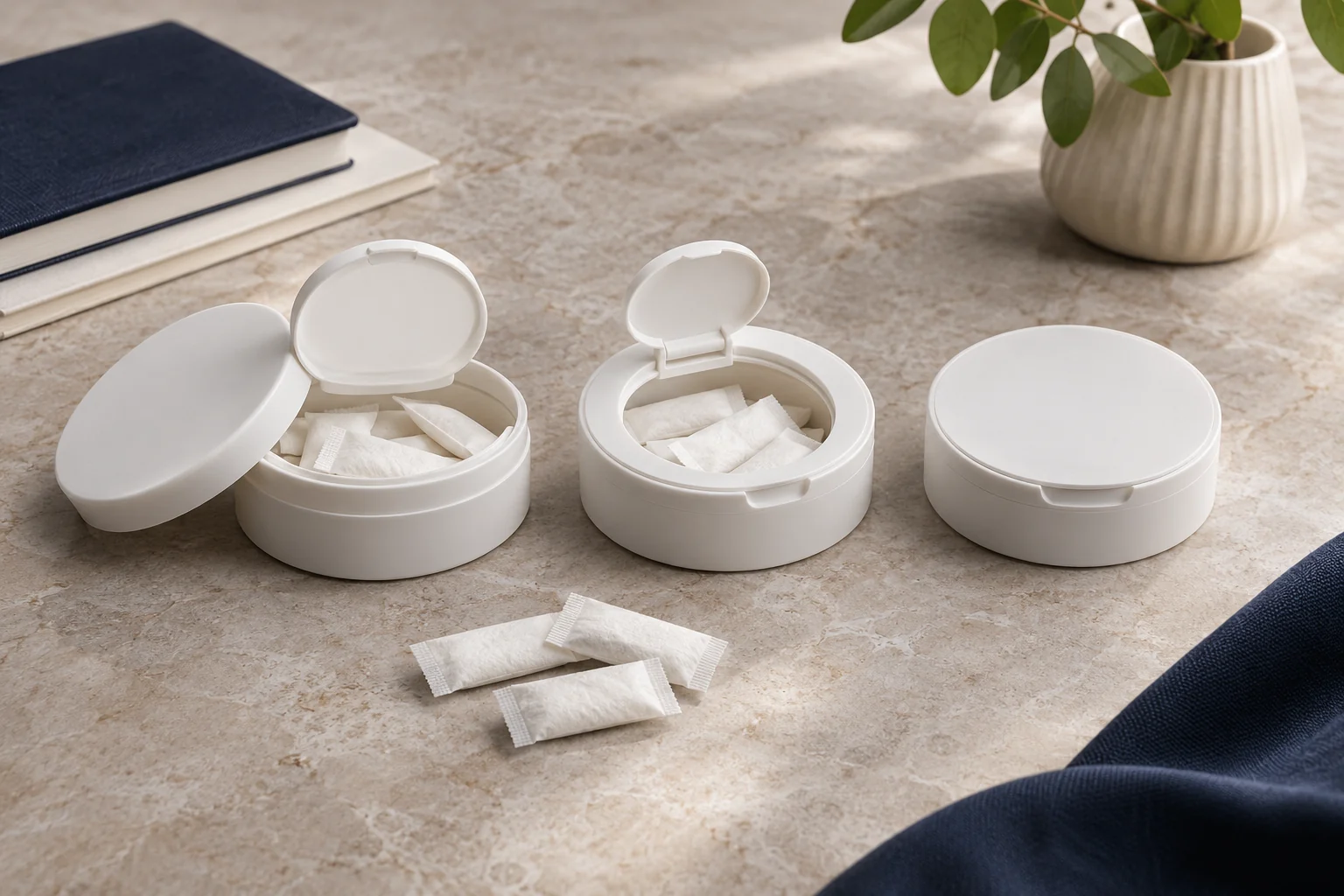
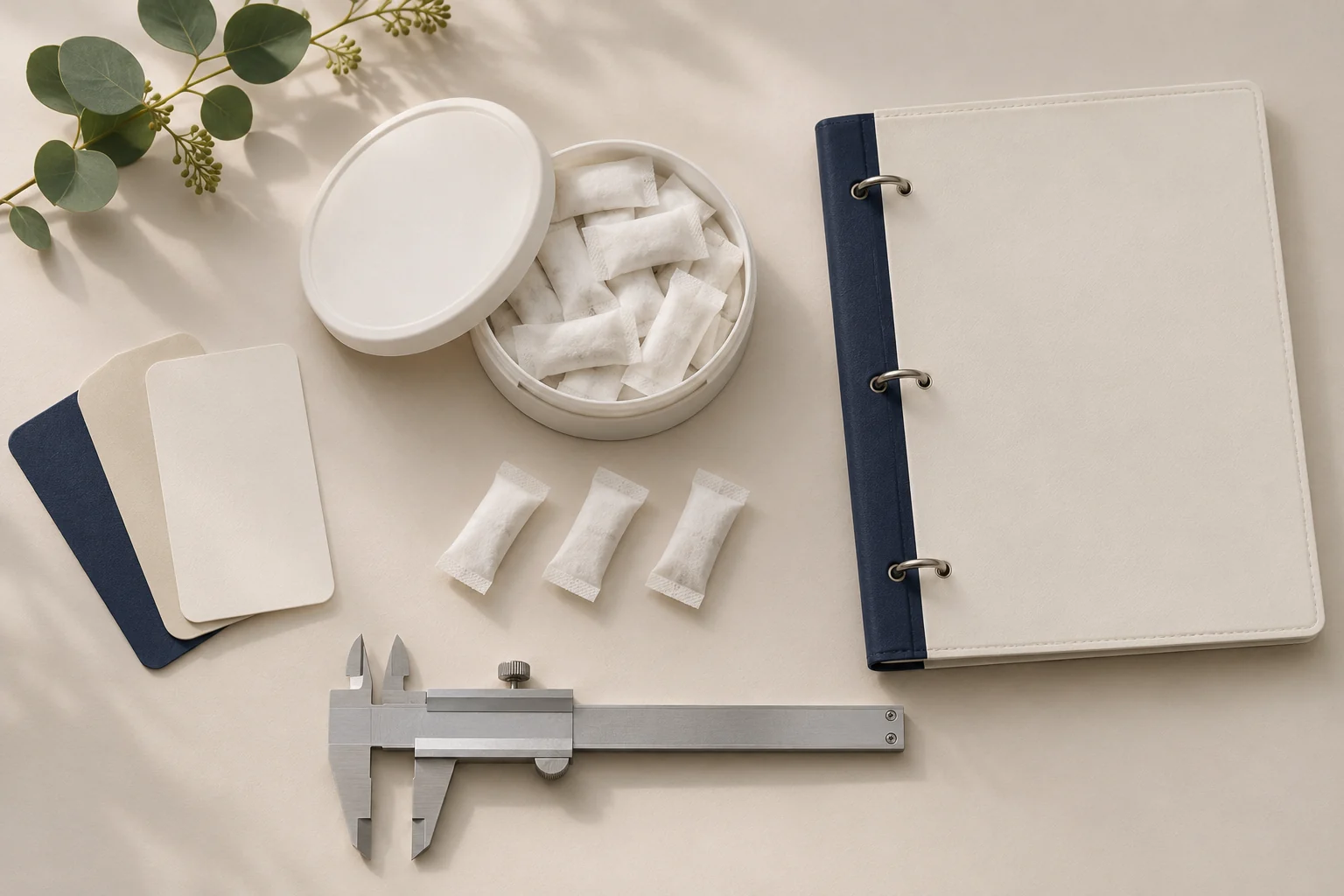
The supplied brief discusses 15, 16 and 20 pouches per can. Actual fit depends on can volume, pouch size, fill weight and packing behavior. Approve the combination physically before ordering labels or production packaging.
Can the lid include a used-pouch compartment?
This can be discussed for models that support it. Check the correct lid and body combination and the intended disposal instructions. A separate compartment should not be assumed from the exterior appearance.
Does a child-resistant model name prove certification?
No. A supplier model name describes its intended closure design. Any required child-resistance claim needs applicable testing and documentation for the exact assembled package, including the relevant standard and market.
Is a tamper band the same as a freshness barrier?
They serve different purposes. Tamper evidence can show opening, while moisture and aroma retention depend on package construction and seal performance. Define and verify both functions for the actual pack.
Can can colors be customized?
The supplied catalog lists color options for relevant models. Confirm color standard, material, finish, minimum production conditions and a physical approval sample. Screen colors are insufficient for final manufacturing acceptance.
When should the label dieline be requested?
Request the dieline after selecting the exact can and closure. Check label dimensions, safe area, overlap and any tamper feature before design approval. Similar diameter cans can require different artwork.
Can labels use lamination or spot UV?
These finishes can be discussed for the chosen substrate and print route. Confirm adhesion, resistance to handling, legal-text readability and compatibility with any coding or tamper feature before release.
Why might sample and production label colors differ?
Sample labels may be digitally printed while production uses four-color printing. Substrate and finishing also affect color. Agree a proof and approval tolerance instead of treating a monitor preview as a production standard.
Can environmental packaging claims be added?
Review each component and destination collection system before making a claim. A polypropylene body alone does not establish that the complete can, label, liner and sleeve are recyclable in every market.
What is the standard caffeine pouch MOQ?
The supplied product brief states 60,000 pouches per flavor/SKU for standard custom production. Different flavors, formulas or caffeine amounts are normally separate SKUs. Confirm mixed-order arrangements in the project quotation.
How many 20-pouch cans equal the pouch MOQ?
At 20 pouches per can, 60,000 pouches correspond arithmetically to 3,000 cans per SKU. Physical capacity, packing quantities and the agreed order configuration still need confirmation.
How many 16-pouch cans equal the pouch MOQ?
At 16 pouches per can, 60,000 pouches correspond to 3,750 cans per SKU. This is a conversion of the supplied pouch MOQ, not a promise that every can model supports that fill count.
How many 15-pouch cans equal the pouch MOQ?
At 15 pouches per can, 60,000 pouches correspond to 4,000 cans per SKU. Confirm the selected model, pouch dimensions and packaging quantities before using the conversion in an order.
What is included in the standard sample scope?
The supplied brief describes up to three SKUs and no more than fifteen sample cans in total. Agree formulas, fill counts, sample labels and shipping details before making samples. Costs and timing require a project quotation.
Can samples carry our own brand label?
The brief supports identification labels and discussion of custom branding. Provide the exact selected can, artwork and required label text. Sample presentation does not replace final production artwork approval.
What does OEM mean for this project?
OEM starts from an agreed customer specification. Define formula ownership, raw-material approval, packaging, quality acceptance and change control in the agreement so responsibilities remain clear when the product changes.
What does ODM mean for this project?
ODM includes development support around the customer's product brief. Agree which formulation, sensory, packaging and testing work is included, who approves each result, and how any developed intellectual property is handled.
Can a quotation state a guaranteed production lead time now?
A firm schedule requires formula approval, material availability, artwork readiness, test scope and production planning. This site does not invent a standard lead time; request a written project schedule with its assumptions.
What changes can trigger a new sample round?
Changes to caffeine level, ingredient source, flavor, moisture, pouch material, sealing or packaging may need reassessment. Agree which changes require fresh sensory, analytical or stability work before approving production.
What should a finished-product COA identify?
It should identify the product, batch, relevant specification, test methods, results and acceptance limits. The agreed scope may include caffeine assay and other project-specific tests. A raw-material COA is a separate document.
Does a raw caffeine COA prove finished-pouch uniformity?
No. It supports the identity and quality of the incoming ingredient. Finished-pouch content and uniformity also depend on sampling, blending, filling and the analytical method used for that matrix.
How should a nicotine-free claim be supported?
Define the manufacturing controls, analytical method, reporting limit and sample scope appropriate to the claim. Distinguish absence of intentionally added nicotine from a measured finished-batch result and avoid unsupported absolute statements.
Can third-party testing be arranged?
Discuss the laboratory, sample plan, matrix suitability, turnaround, reporting limits and cost before commissioning work. Confirm which reports already exist and which new tests are needed for the exact formula and batch.
Is caffeine content testing a release test?
Content testing measures caffeine in the sample using the specified assay. Release testing measures what leaves the pouch under stated conditions over time. Neither alone is a human absorption study.
How is the expiry period established?
Use evidence relevant to the final formulation, package and storage conditions. Review analytical, physical, microbial and sensory endpoints as appropriate. Do not copy a shelf-life period from a reference ingredient or another pouch.
Can heavy metals and microbiology be included?
They can be included in the agreed testing scope where relevant. Specify the analytes, methods, sampling plan, limits and destination requirements. A generic passed statement is less useful than a report tied to the actual product.
What records help with batch traceability?
Link raw materials, packaging lots, processing records, finished batch coding and shipment records. Agree retention and complaint procedures. The code printed on a can must connect to records that can actually be retrieved.
What happens when a specification is not met?
Agree a documented hold, investigation, disposition and customer communication process before production. Assess the actual deviation and evidence. Do not replace a failed acceptance criterion with an informal sensory approval.
Can this website prove a factory certification?
Only a current certificate with the correct legal entity, site, scope and issuer can support a certification claim. No certification logo or invented certificate number is used as a substitute for those documents.
Are caffeine pouches approved everywhere?
No universal approval follows from the format or ingredients. Classification, composition, claims, sale channels and labeling depend on destination rules and the actual product. Review the selected market before finalizing the commercial brief.
Does FDA registration mean a finished product is FDA approved?
Those are different concepts. A registration record must not be presented as FDA endorsement or product approval. Any public regulatory statement needs its precise basis, scope and current status checked.
What should an importer review before launch?
Review classification, ingredient permissions, amounts, warnings, claims, local-language labeling, responsible-party details and required notifications or records. Include the intended use and package rather than reviewing only a formula spreadsheet.
Can one English label serve every market?
That depends on the destination's language and information requirements. Build the artwork from a market-specific checklist and leave space for legally required content. Website translation does not validate the physical product label.
Can a focus claim be printed because the product contains caffeine?
Ingredient presence alone does not authorize a claim in every market. Check the exact wording, qualifying conditions and evidence applicable to the finished product and destination before approving artwork.
Should a serving be defined per pouch or per can?
Define the serving and caffeine declaration clearly, then apply destination rules. The consumer must be able to distinguish milligrams per pouch from total caffeine in the can and from any daily-use directions.
Does a website language imply local stock or local approval?
No. Language access helps a buyer review the program. Availability, importer arrangements, stock location and legal eligibility are confirmed separately for the actual destination and SKU.
Can sports-tested or doping-safe claims be used?
Only an appropriate current testing or certification program with the correct product scope can support the relevant statement. Ingredient review alone does not establish that every batch has been tested or certified for sport.
What are the limits of community reviews?
They help identify questions about flavor, comfort and expectations. They do not establish prevalence, causation, product safety or clinical benefit. This site's answers use original procurement guidance rather than copying forum advice.
Why are technical references named without outbound links?
The public reference notes identify relevant organizations and document titles while keeping the site internally focused. Buyers can request the project-specific documents that matter, including specifications and agreed analytical reports.
Can other functional pouch categories be developed?
The supplied product reference covers fourteen pouch categories. Ingredient combinations are starting points for feasibility and destination review, not ready-to-market medical products. Each program needs its own composition, testing and label decisions.
Can caffeine and sleep ingredients be combined in one product?
Do not infer that a long ingredient list creates a coherent product. Define the intended use and review interactions, suitability and positioning. The sleep and caffeine programs should have distinct, clearly reviewed briefs.
Can a melatonin pouch be offered in every destination?
No. Melatonin classification and permitted supply vary by market. It is a project category for review, with composition, intended use and legal route confirmed before any commercial offer or claim.
What matters for a mushroom pouch brief?
Specify species, plant or fungal part, extract ratio, marker compounds, identity, contaminants and the intended amount. A mushroom category name does not establish ingredient equivalence or a proven cognitive benefit.
Can an oral care pouch replace brushing or dental care?
It should not be promoted as a replacement. A flavor-freshening concept and a therapeutic oral-health claim require different evidence and review. Keep the proposed claim within what the actual finished product can support.
Are caffeine gummies available for OEM/ODM?
Yes. The owner has confirmed a caffeine gummy development program with caffeine within 50 mg per piece and a minimum order of 500 kg per SKU. Confirm the precise amount, piece weight and destination before quotation.
Does 500 kg mean 500 kg of caffeine?
No. It is the total finished gummy order weight per SKU. The active caffeine amount per piece is a separate specification, and piece count depends on the agreed finished piece weight and production yield.
Can the gummy MOQ be converted to a piece count?
Use the agreed piece weight. For a purely arithmetic example, 500 kg divided by 5 g per piece equals 100,000 pieces before any agreed yield or packing allowance. Five grams is an example, not a confirmed product specification.
Can gummies use the pouch's caffeine formula unchanged?
No direct transfer should be assumed. The gummy base, processing temperature, active distribution, taste, stability and serving instructions require their own development. A pouch sample does not validate a gummy product.
Can caffeine gummies be branded like children's sweets?
The program is for adult-market products. Avoid child-directed marketing, and ensure the caffeine identity, serving amount and handling warnings are clear. The supplied sample photo illustrates physical shapes, not an invitation to market to children.
Can one purchase order include several SKUs?
Discuss the intended mix before quotation. Formula, caffeine amount and flavor variants normally have their own SKU definition and minimum quantity. Shared artwork or cartons do not automatically merge their production requirements.
What should a reference sample be labeled with?
Use an identifier that connects the can to its formula version, caffeine target, flavor, pouch construction and preparation date. A sample label should make it possible to investigate feedback without relying on the recipient's memory.
Can a supplier change an ingredient without notice?
Agree a change-control process. A source, grade or carrier change may affect assay, allergens, flavor, processing or labeling. Define which changes require customer approval and repeat evaluation before placing an order.
What shipping information is needed for samples?
Provide the receiving company, destination, contact person and any importer or courier requirements. Check product classification and documents for the route. The sample scope does not include a promise of customs clearance.
Can delivered samples be treated as saleable stock?
Samples are for the agreed evaluation scope. Review label status, legal requirements and commercial release conditions separately before any sale. A sample can with a brand label is not automatically a market-ready product.
What should the artwork approval record include?
Record the file version, can model, dieline, language, ingredient and caffeine statements, warnings, batch-code area and print proof. Confirm who signs off legal content and who signs off color and layout.
Can a target retail price establish the manufacturing cost?
A retail target helps define a project but does not determine the quote. Ingredient choice, active load, pouch construction, packaging, order quantity and testing all contribute. Request a quotation against one defined specification.
Can we publish product photos before final samples?
Use images that accurately describe the proposed configuration and avoid implying a tested final product. Confirm the finished formula, packaging and label before using photography as evidence of commercial availability.
Where should a complaint about a finished batch go?
Send the batch code, product version, date, observed issue and retained sample details to the project contact. Avoid sending medical records through the public form. Urgent health concerns require appropriate professional care.
What should be settled before dispatch?
Confirm batch acceptance, agreed documents, pack count, artwork version, destination and shipping terms. Retain the link between the shipment and production records so a later inquiry can identify the exact product supplied.
Bring a clear brief
Tell us your market, formula targets, flavor, pouch format and packaging. We will review the project scope before confirming samples, tests and a quotation.
Discuss your project