
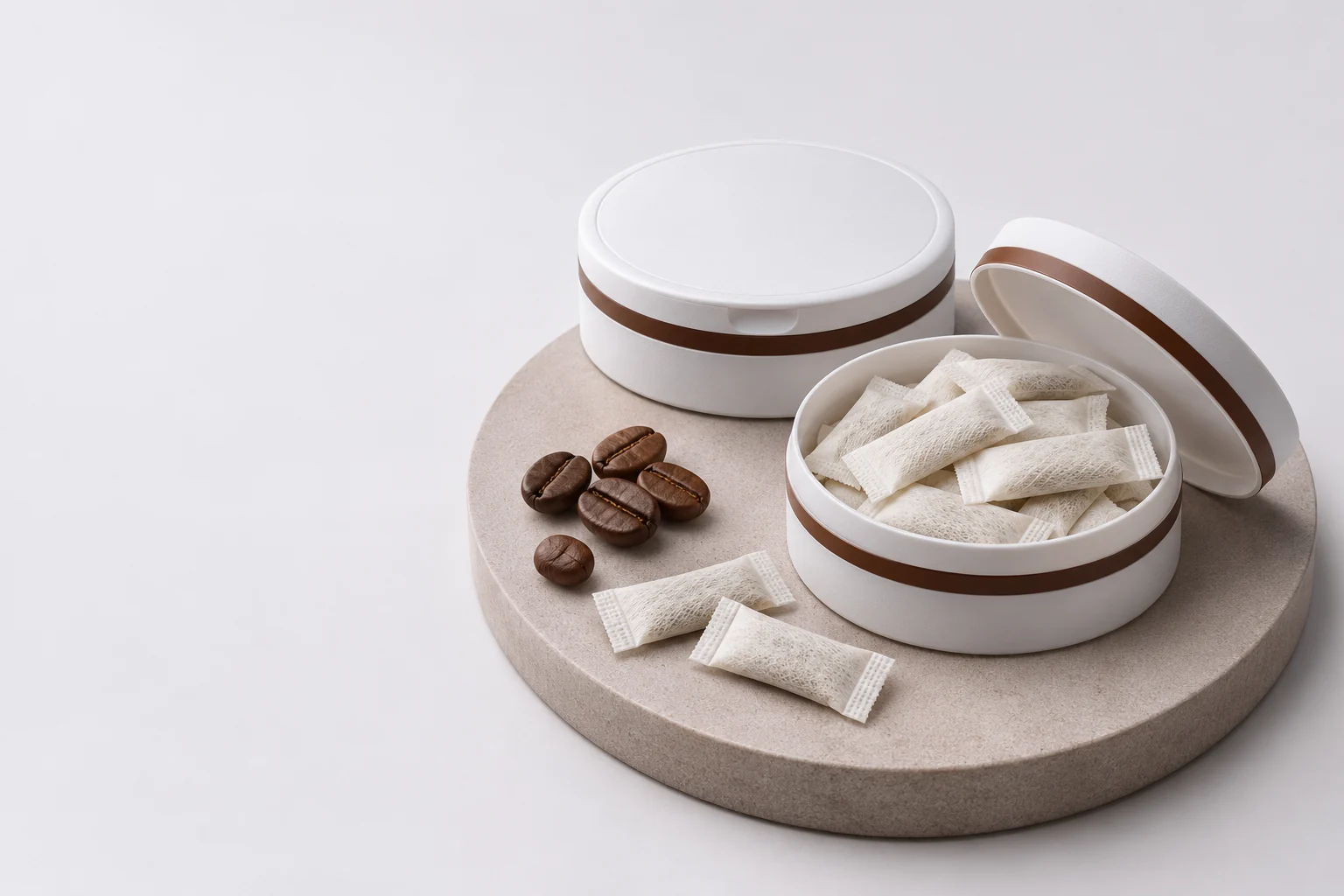
Coffee pouches
Coffee-derived ingredients with a separately specified total caffeine level and coffee flavor profile.
Discuss your briefFormulation direction
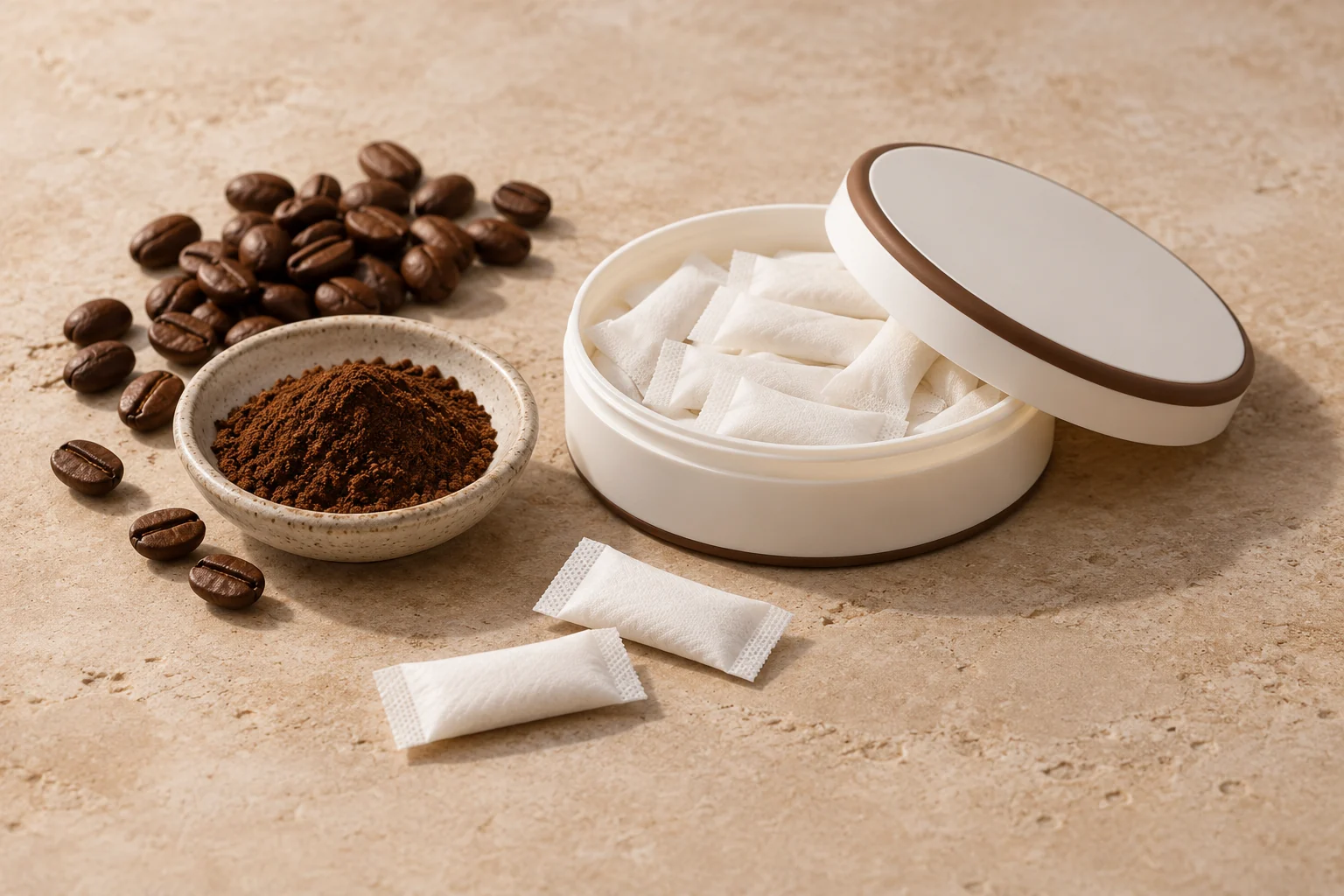
Coffee-derived ingredients with a separately specified total caffeine level and coffee flavor profile.
The ingredient list is a starting point for discussion. We review source, amount, compatibility and available evidence before confirming a sample. A commercial formula must fit the pouch, its intended use and the destination market.
What needs to be specified
- Distinguish coffee flavor from caffeine source. Check bitterness, color, storage behavior and stain-related claims.
- Pouch dimensions, fill weight, moisture and the intended use window.
- Flavor, sweetness and cooling targets, assessed through the finished sample.
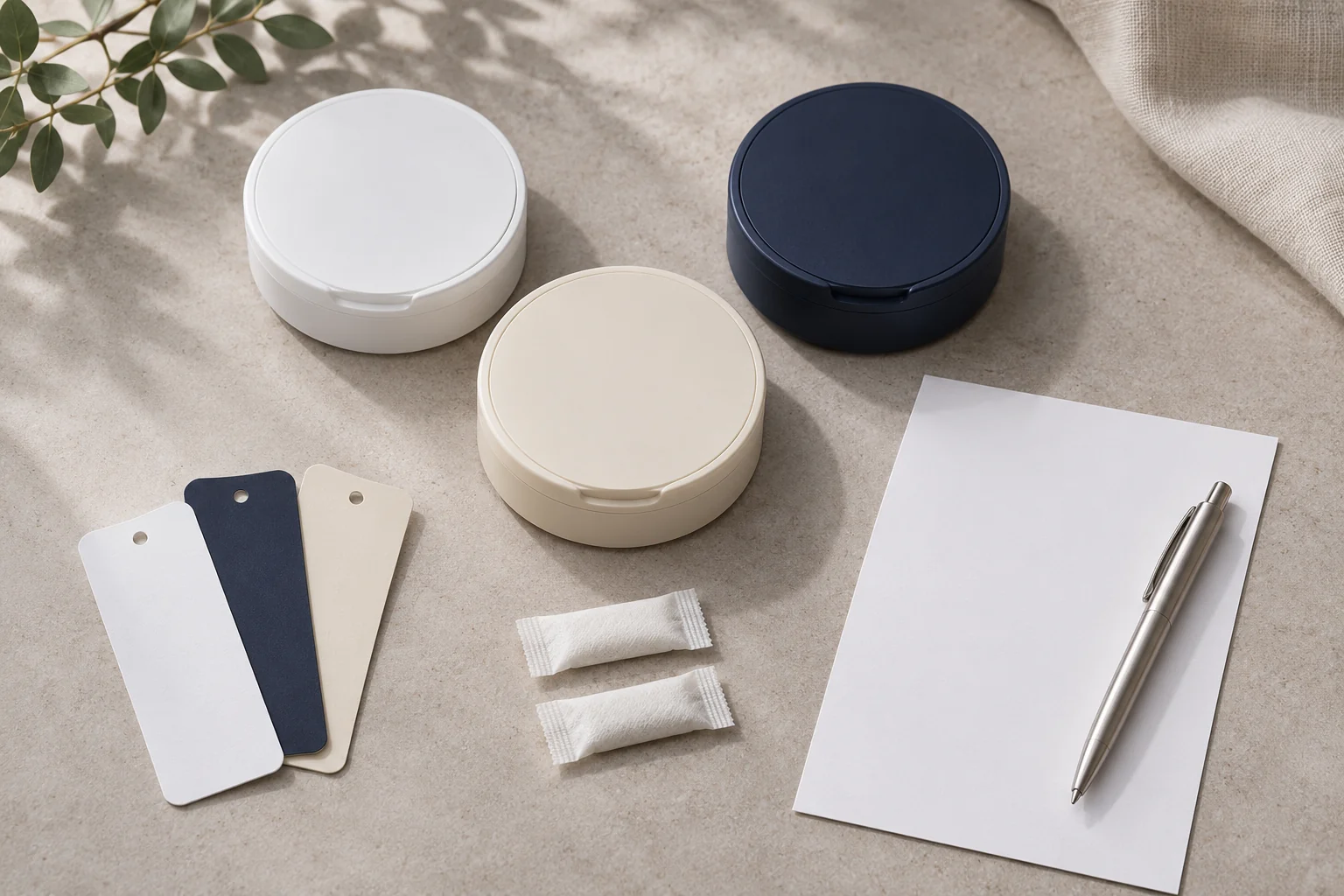
- Can model, count per can, color, label dieline and batch-code area.
- Required specifications, testing, sample scope and written acceptance criteria.
Caffeine and commercial parameters
| Parameter | Project basis |
|---|---|
| Amount | 50, 80 and 100 mg per pouch can be discussed; firm manufacturing maximum 150 mg per pouch; amounts above 150 mg cannot be made, subject to formula and market review. |
| MOQ | 60,000 pouches per flavor/SKU for standard custom caffeine production. |
| Pack examples | 15 / 16 / 20 pouches per can, subject to physical fit. |
| Sample scope | Up to 3 SKUs; no more than 15 cans total in the standard discussed scope. |
Sample evaluation
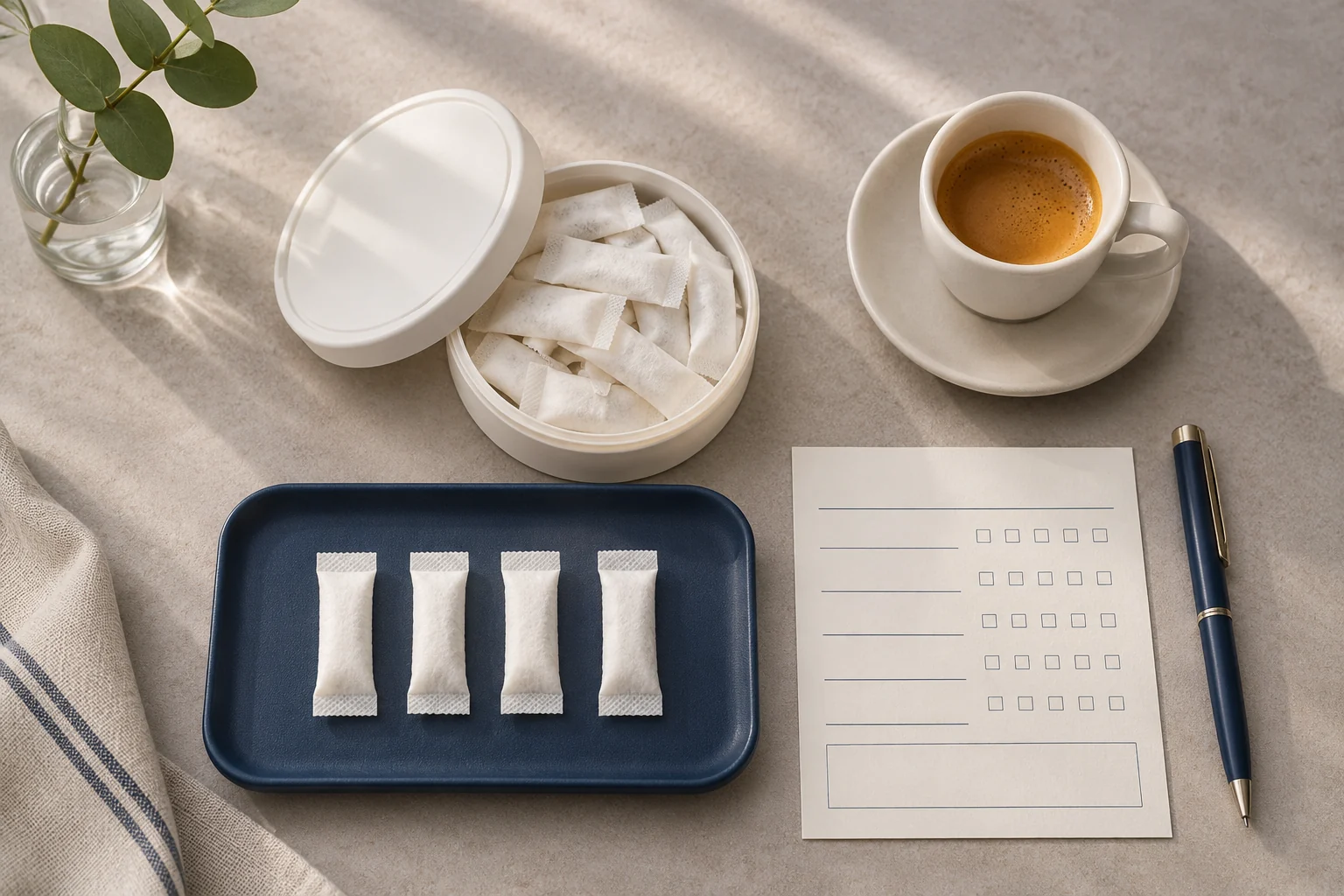
Approve a documented reference sample. Record the initial taste, later bitterness, cooling, texture, seam feel and pack fit. If ingredients or packaging change, decide whether sensory, analytical or stability work needs repeating.
For the flavor menu and actual can model dimensions, use the flavor catalog and the can catalog.
Practical questions
What information starts a custom formula?
Provide the destination, ingredient targets per pouch, caffeine sources, preferred flavor, sweetness, cooling, pouch size, moisture and pack count. Include ingredients or claims to avoid and any required analytical documents.
Can we develop a caffeine-only formula?
A caffeine-focused formulation can be discussed without adding a long list of functional ingredients. The carrier, flavor and stability system still need development, and the final ingredient list must disclose the actual composition.
Can B vitamins be added?
They are a development option subject to permitted forms, amounts, compatibility, stability and label review. More ingredients can reduce available fill space and introduce additional assay and labeling requirements.
Can different botanicals share one caffeine specification?
Only when every caffeine source is identified and controlled. Guarana, coffee and tea extracts can vary in caffeine concentration. Specify each raw material and the finished total, rather than relying on an extract's name.
Does a plant extract automatically count as clean label?
Clean label has no single universal technical definition. State the actual ingredient, source and processing information that can be supported, and agree with the customer what exclusions or declarations matter.
How are allergens handled in flavor development?
Review the complete flavor system, carriers, processing aids and cross-contact controls. A flavor name such as latte or coconut does not establish its allergen status. Obtain the relevant supplier declarations and finished-label review.
Can a sugar-free claim be used for every flavor?
No. Check the finished composition and destination rules. Sweeteners, fruit powders, flavor carriers and nutrition calculations may differ across SKUs. A claim approved for one formula should not be automatically copied to another.
Can vegan suitability be assessed?
Review ingredient origins, flavor carriers, processing aids and any applicable cross-contact requirements. Document the exact declaration or certification being requested; do not infer vegan suitability from the fiber pouch alone.
Why can a high active load affect the pouch size?
Active ingredients occupy space and can change bulk density, moisture behavior and flow. The target dose must fit with the carrier and flavor system while allowing a sound seal and acceptable mouthfeel.
Can we claim controlled or sustained release?
Only with suitable finished-product evidence and a clear definition of the claim. A botanical source or a general encapsulation concept does not establish a release profile for the finished pouch.
Bring a clear brief
Tell us your market, formula targets, flavor, pouch format and packaging. We will review the project scope before confirming samples, tests and a quotation.
Discuss your project