
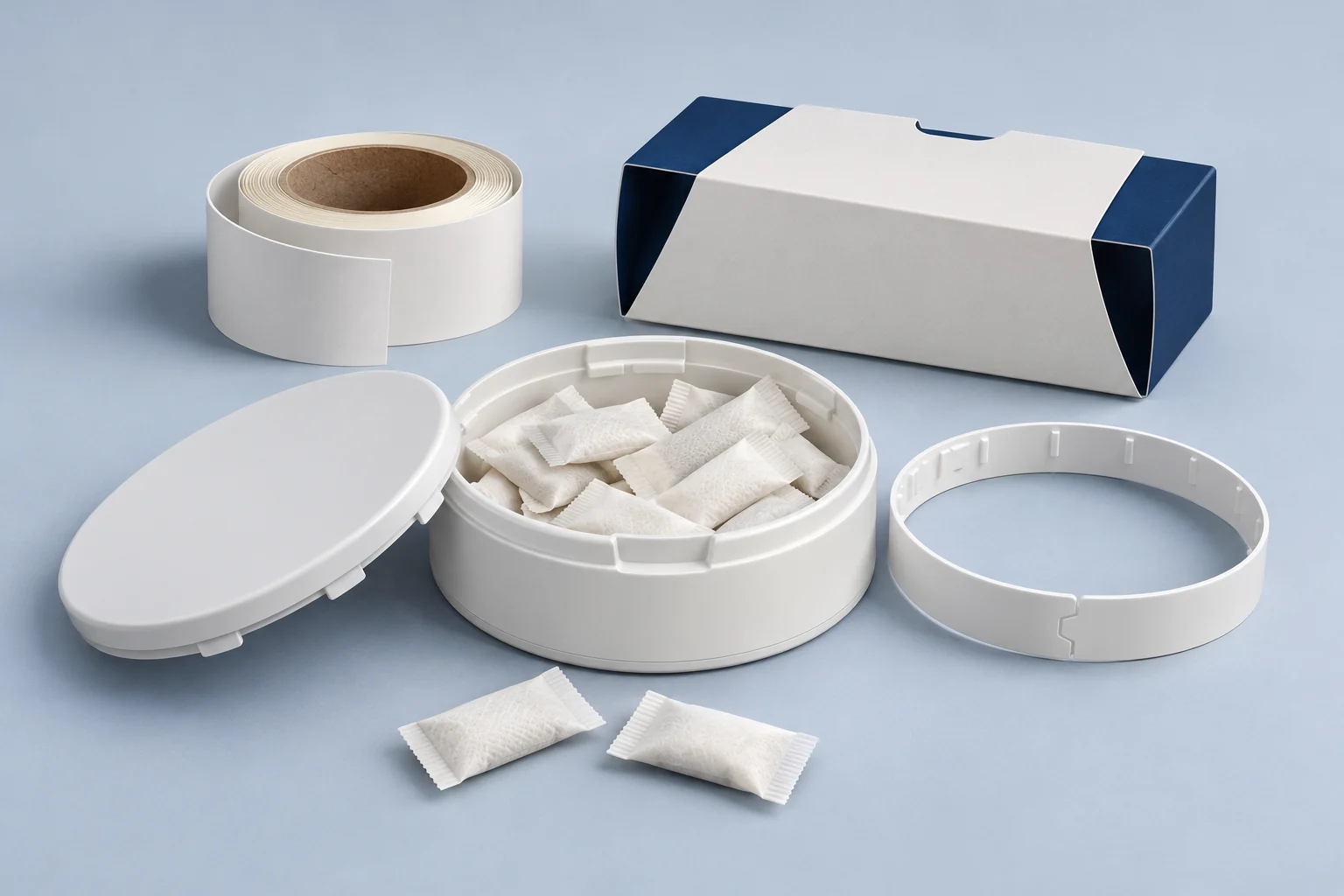
Development note
Prepared by the LINKBIOLABS product information team. Reviewed 17 November 2026. Scope: OEM/ODM procurement and product development.
A familiar shape still needs a drawing
Low round oral pouch cans are familiar to buyers, but diameter alone does not tell you whether a pack will work. Height, internal volume, lid geometry and any used-pouch compartment change the available space. Select a model code and confirm the current drawing.
The supplied catalog lists 22 can models, including slim, flat, flip-top and other opening configurations. Dimensions on the website reproduce that catalog. Treat the physical sample and approved drawing as the basis for final procurement.
Check capacity with finished pouches
Use the actual pouch fabric, dimensions, fill weight and moisture when checking capacity. Empty fabric or a different reference product can pack differently. Record the pouch count, closure clearance and whether the lid closes consistently after handling.
Fifteen, sixteen and twenty pouches per can are discussed in the product brief. The chosen count affects both the artwork and the conversion of the 60,000-pouch MOQ. It does not prove that every listed can supports that count.
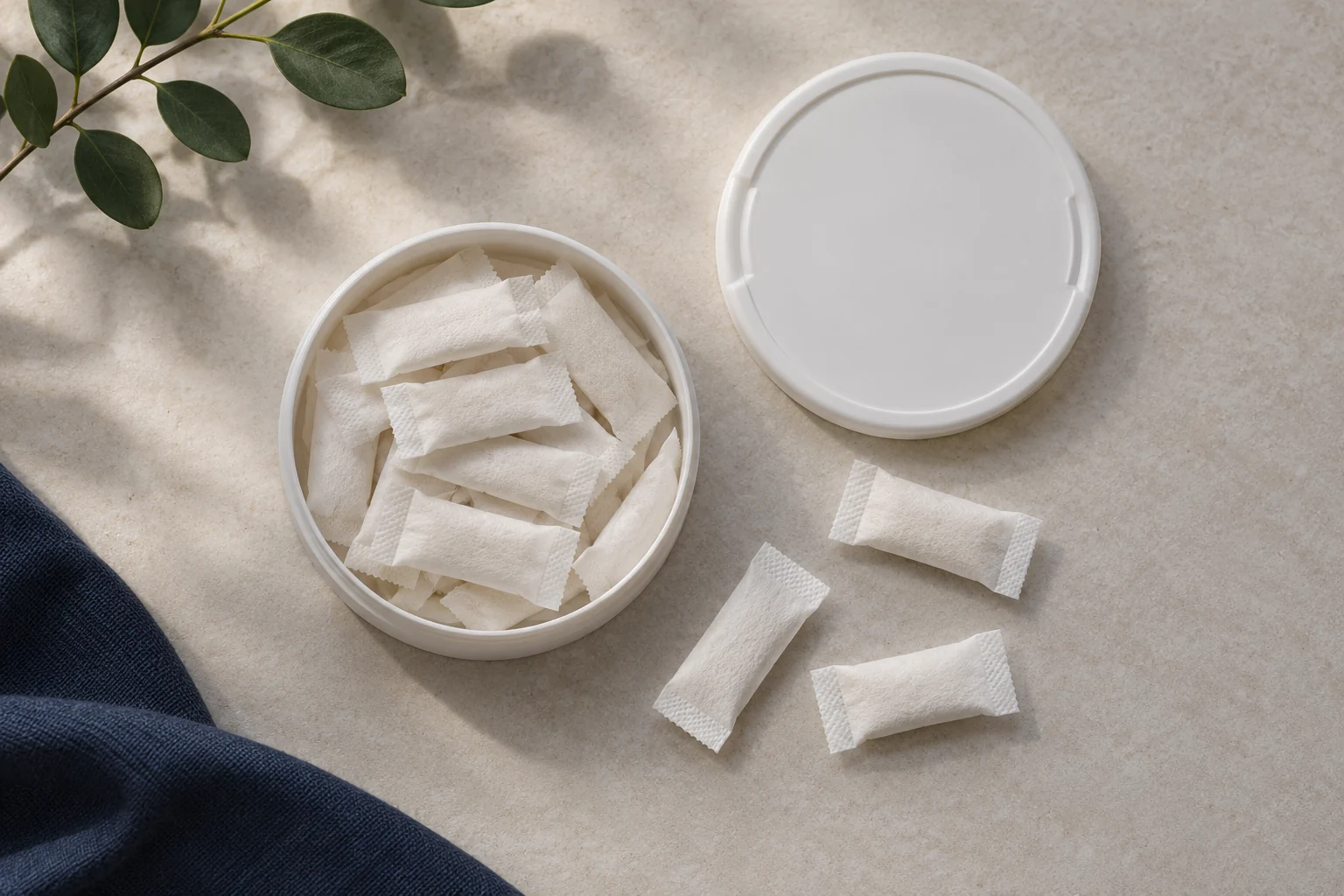
Separate closure functions
A closure may provide access, tamper evidence, a used-pouch compartment or a moisture barrier. One feature does not establish the others. Agree which functions the final assembled package must provide and how each will be checked.
Supplier model names that refer to child resistance are not evidence of a passed test. Any required claim needs documentation for the exact assembled package under the applicable standard. Confirm the required scope before placing artwork on the can.
Get the dieline before finishing artwork
Request the dieline for the selected model, including label size, overlap, safe area and relevant lid details. Keep required information and the batch-code area readable. A label designed for a similar-looking can may cover an opening feature or fail to align.
Review the actual print route. Digital sample labels and four-color production printing can differ in color. Substrate, lamination and spot UV can change appearance and adhesion. Approve a proof and the relevant acceptance standard rather than only a screen image.
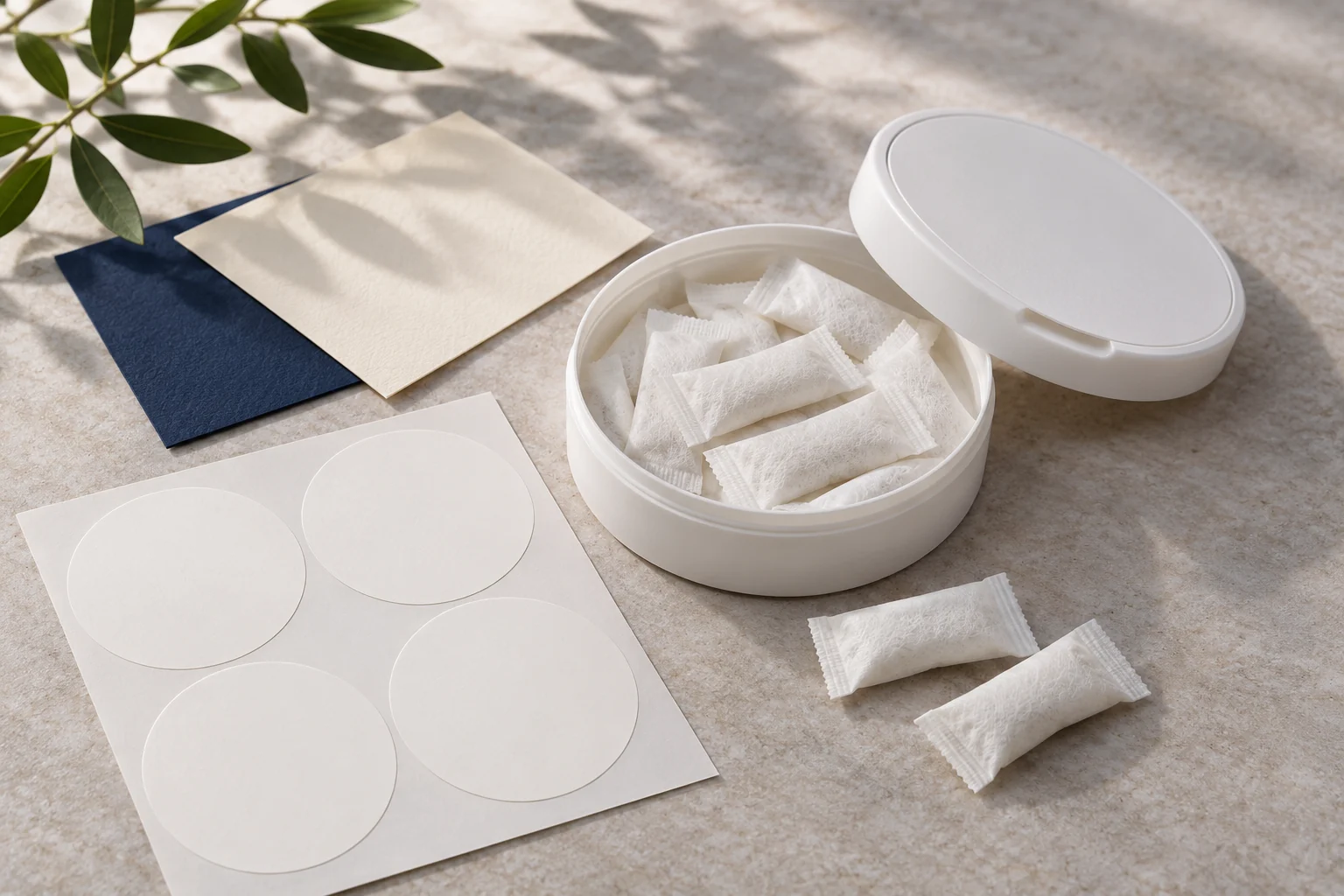
Confirm material and storage assumptions
Document can material, liner or seal where relevant, label and any sleeve. Aroma and moisture retention depend on the assembled system. A tamper band does not by itself establish barrier performance, and an outer carton does not resolve a poorly fitting closure.
Review stability using the intended final pack and storage conditions. If a formula loses aroma or changes texture, investigate both formulation and packaging. Do not apply another product's expiry period to a new pack without suitable evidence.
Make environmental statements specific
A material name alone does not establish the recyclability of the complete pack in every market. Labels, liners, colors and collection systems matter. Define the component and destination behind a claim and retain the supporting documents.
Likewise, a fiber-looking pouch is not automatically plastic-free or biodegradable. Check its full composition and the conditions relevant to the proposed statement. Broad green claims can create avoidable questions during an importer's review.
Approve one complete pack specification
Record the can SKU, drawing version, color standard, closure, seal, pouch count, label file, print method and code position. Include a physical reference and agreed checks. When a component changes, assess whether fit, label, stability or claim evidence needs updating.
Source note: model codes and dimensions are taken from the supplied CANS SKUs catalog. Packaging functionality, certification and environmental claims remain subject to the exact model documents and destination requirements.