
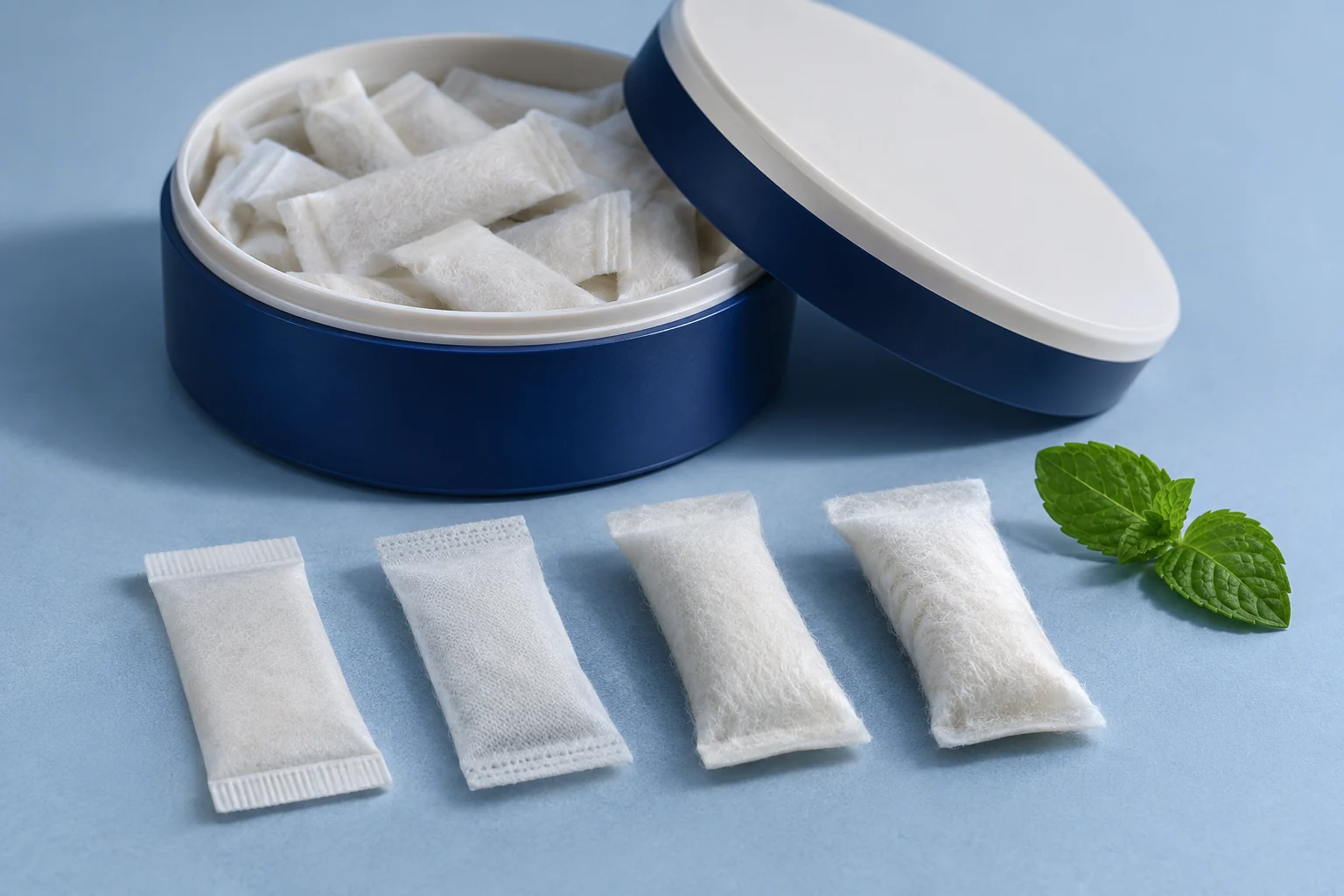
Development note
Prepared by the LINKBIOLABS product information team. Reviewed 17 November 2026. Scope: OEM/ODM procurement and product development.
Comfort is several variables at once
A pouch can feel harsh for reasons that are not visible in a product photo. Fabric texture, seam stiffness, fill shape, moisture and the flavor system all contribute. A useful sample brief separates those variables so feedback can identify a change that can be tested.
Do not use burning as a performance signal. Complaints about pain, peeling or persistent soreness call for stopping use and appropriate professional assessment, along with a documented product investigation. They should not be dismissed as proof that the pouch is strong.
Separate flavor from caffeine strength
Cooling ingredients create a sensation that is different from measured caffeine content. A mint sample can feel stronger while having the same caffeine assay as another sample. Specify aroma, cooling, sweetness and bitterness independently from milligrams per pouch.
Higher ingredient loading can make bitterness harder to manage and reduce the room left for the carrier. The manufacturing maximum for this program is 150 mg caffeine per pouch, and amounts above it cannot be made. That limit is not a comfort guarantee or a recommended consumer serving.
Look at the filled geometry
Length and width matter, but so do thickness and where the mixture sits. A loosely filled slim pouch can feel different from a compact fill in the same fabric. Evaluate a completed sample, including whether the ends fold or feel stiff during the intended use.
A mini format needs its own review. Less fill space can change the feasible composition, and a smaller physical pouch is not automatically lower dose. Keep dimensions, fill weight and active amounts as separate specification fields.
Compare seams on the actual material
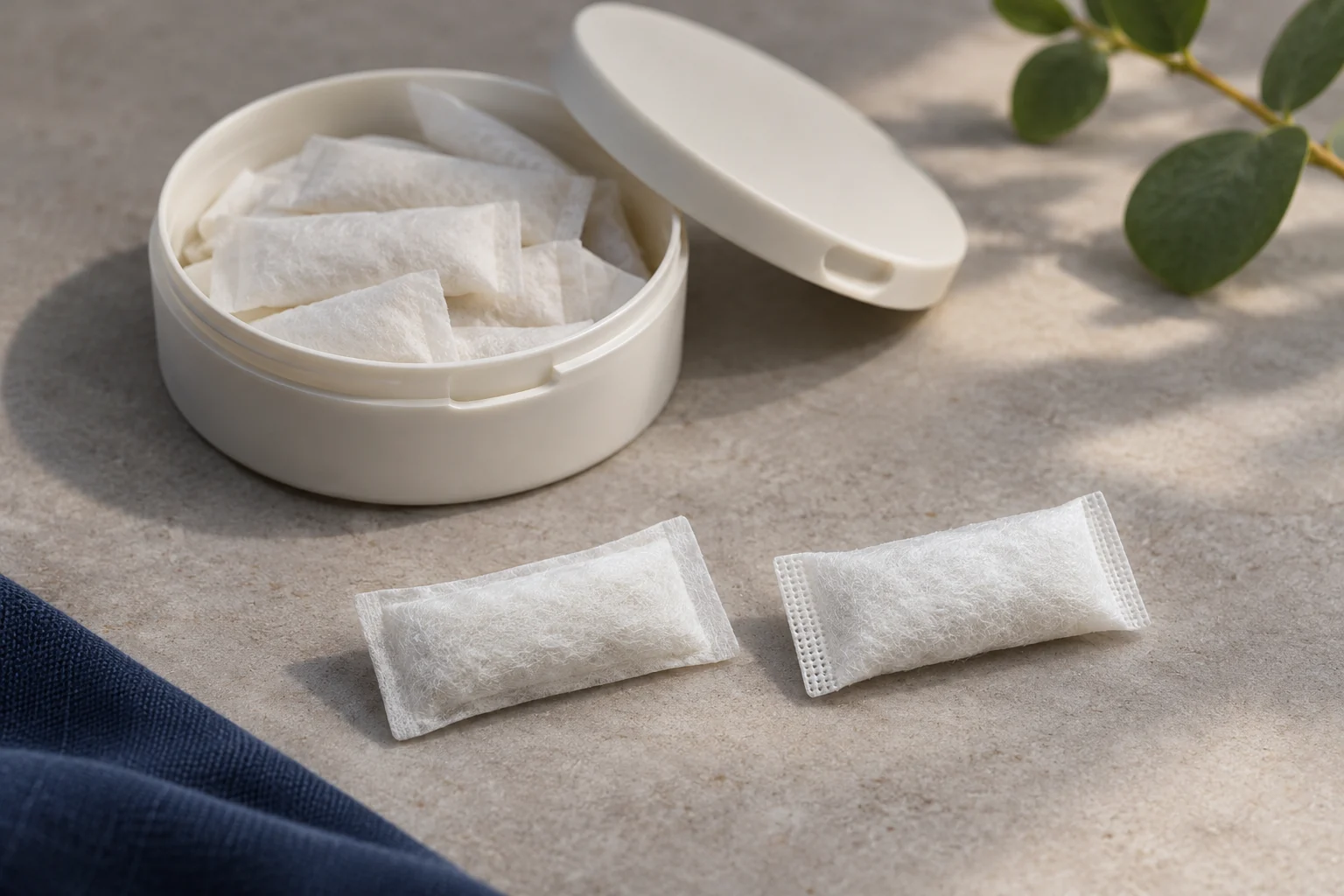
Pressed and ultrasonically bonded seams can both be evaluated. Their usefulness depends on material structure and processing conditions. Check bond integrity, loose particles, visual consistency and seam feel together rather than treating one process name as a quality claim.
If residue or leakage appears, retain samples and record batch, fabric lot, fill and moisture. Identify whether the issue is a weak bond, a tear or handling damage. The investigation should connect observations to the production record.
Use a sample scorecard
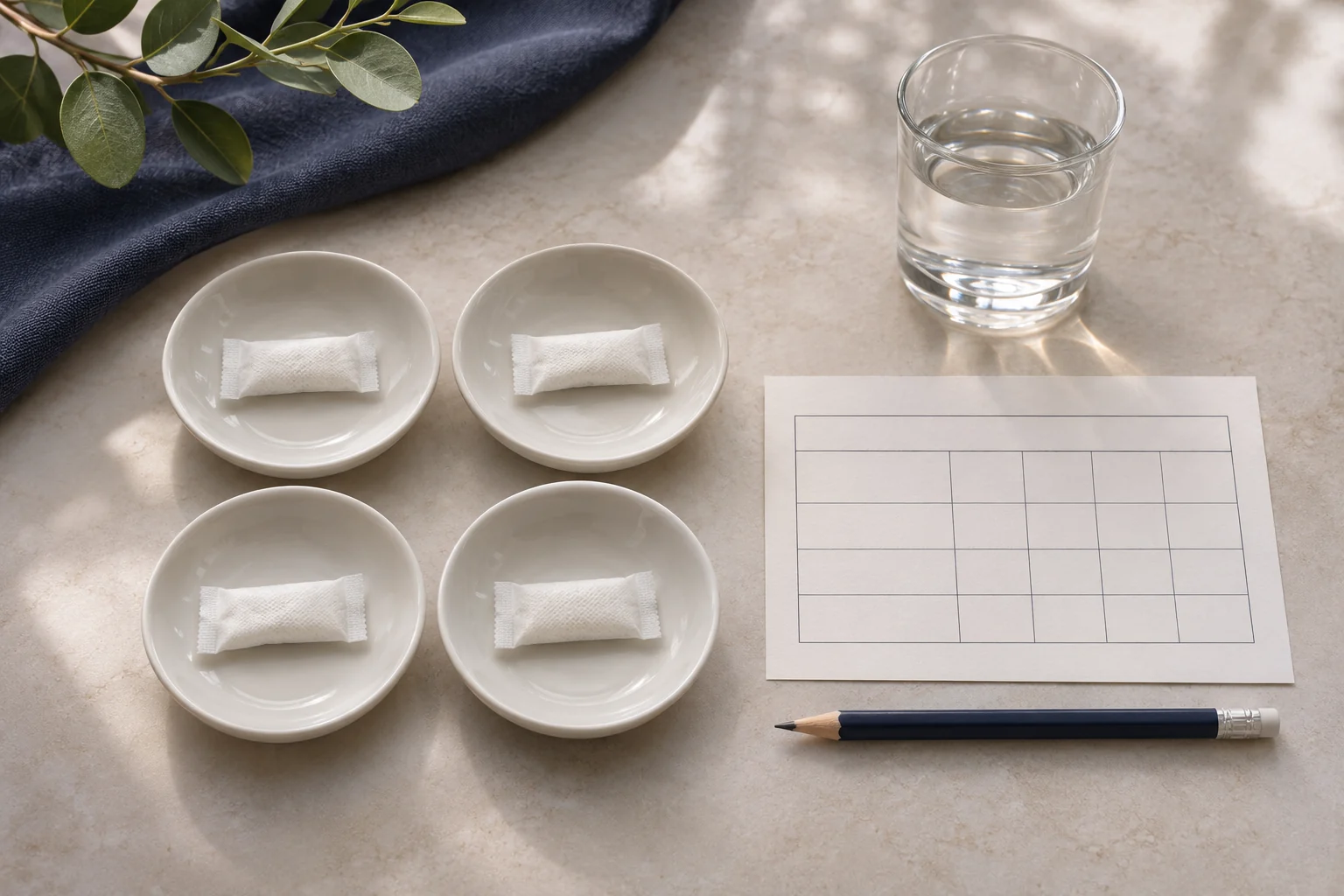
Keep the formula stable while testing a construction change, or keep construction stable while comparing flavors. Record initial taste, later bitterness, cooling, sweetness, texture, seam feel and any irritation separately. Include sample age and storage because these can affect comparisons.
Choose a defined sample question. The supplied standard scope allows discussion of up to three SKUs and fifteen cans in total at most. A focused comparison often provides clearer feedback than three samples with every variable changed.
Do not overread community experience
Online discussions repeatedly ask about gum irritation, perceived effect and whether the material should dissolve. They help a product team identify unanswered questions. They cannot establish how common an effect is or which ingredient caused it.
A nicotine-free statement also needs careful scope. It does not mean the formula is suitable for everyone, has no caffeine effects or cannot irritate. Consumer directions and marketing should reflect the evidence for the actual product.
Keep the approval record usable
Write down the selected fabric, dimensions, seam process, formula and sensory target, together with the reference sample and any test requirements. Agree how complaints are recorded and which changes trigger another evaluation. A signed-off photo alone cannot capture those details.
Source notes: community questions informed the topics, not the medical conclusions. FDA and EFSA caffeine materials support general context about sensitivity and exposure. The site does not claim a clinical gum-safety result or guaranteed absence of irritation.