
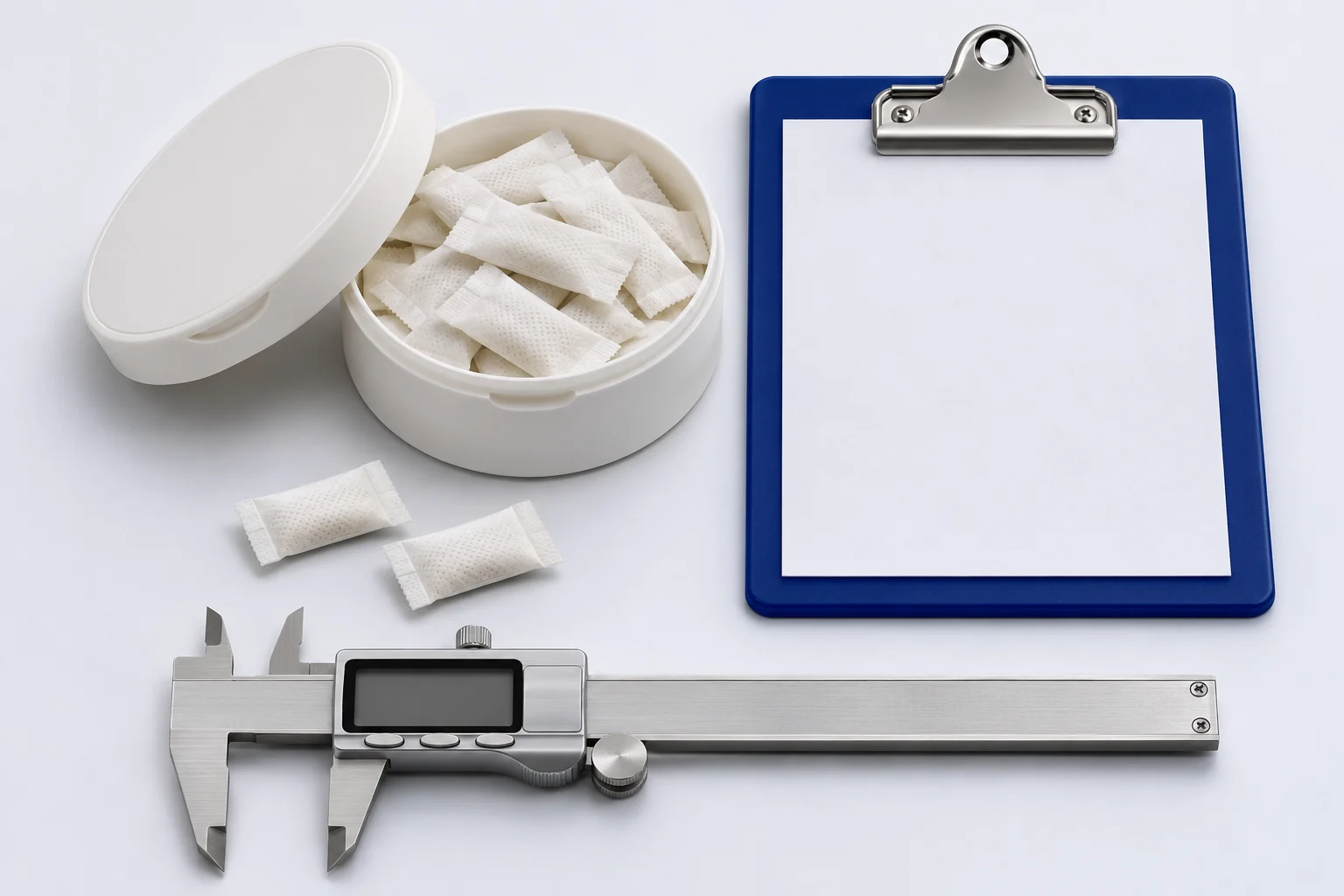
Development note
Prepared by the LINKBIOLABS product information team. Reviewed 17 November 2026. Scope: OEM/ODM procurement and product development.
Start with the destination and the serving
A useful OEM brief starts with the market in which the product will be sold and the exact amount declared per pouch. Those two decisions affect ingredients, labeling and the test plan. A brand name, a reference can and a target retail price leave too many manufacturing questions unanswered.
For this caffeine pouch program, 50, 80 and 100 mg per pouch can be discussed. The firm manufacturing maximum is 150 mg per pouch; amounts above 150 mg cannot be made. That manufacturing limit is not a recommended intake or confirmation that every destination permits a particular amount.
Separate dose, fill weight and pack count
Write three separate fields: caffeine milligrams per pouch, total fill weight per pouch and pouches per can. They describe different parts of the product. A larger fill does not automatically contain more caffeine, and the same caffeine target can need a different fill when the ingredient system changes.
A botanical source needs more detail than its common name. For guarana or coffee extract, specify identity, measured caffeine percentage and any other caffeine sources. The total on the finished label must reflect the agreed full formulation.
Describe the sensory target in parts
Instead of asking for strong mint, define mint aroma, cooling intensity, sweetness, bitterness and the intended use window. A sharper cooling sensation does not establish caffeine strength. Evaluate the final processed sample because the carrier and moisture can change how the same flavor feels.
The supplied flavor menu contains 91 directions. Use it to select a starting point, then confirm compatibility in the active formula. A fruit, coffee or dessert-style name does not by itself define ingredient content, allergens or nutrition claims.
Choose the pouch and can together
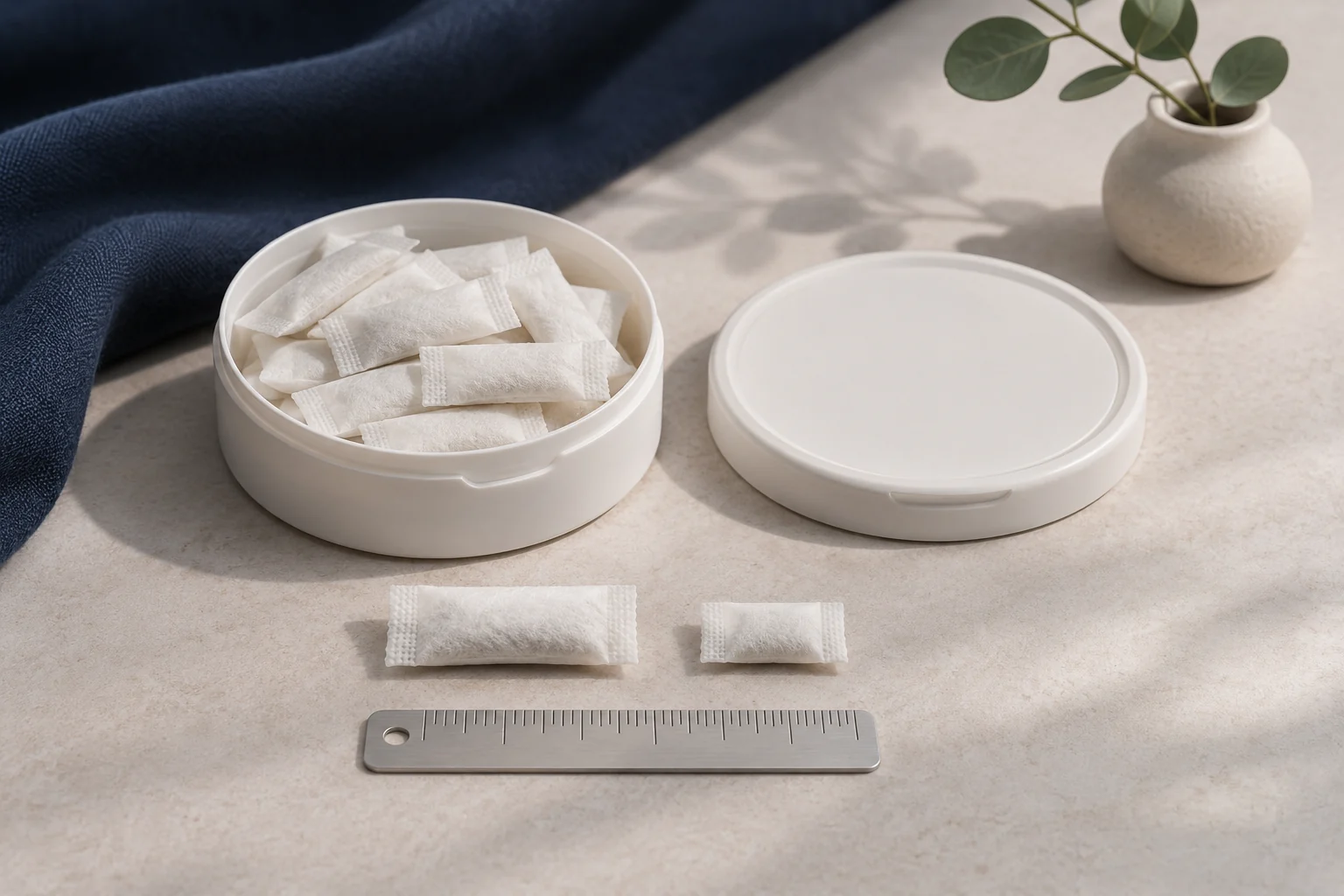
Slim format, fabric, fill, seam and moisture all affect the space a pouch occupies. Select a can model from the 22-model catalog, then check a finished fill in that physical pack. Approve the label dieline after the exact model is selected.
The product brief discusses 15, 16 and 20 pouches per can. None should be assumed to fit every model. Lid clearance, packing behavior and any used-pouch compartment can change the available volume.
Make the sample round answer a question
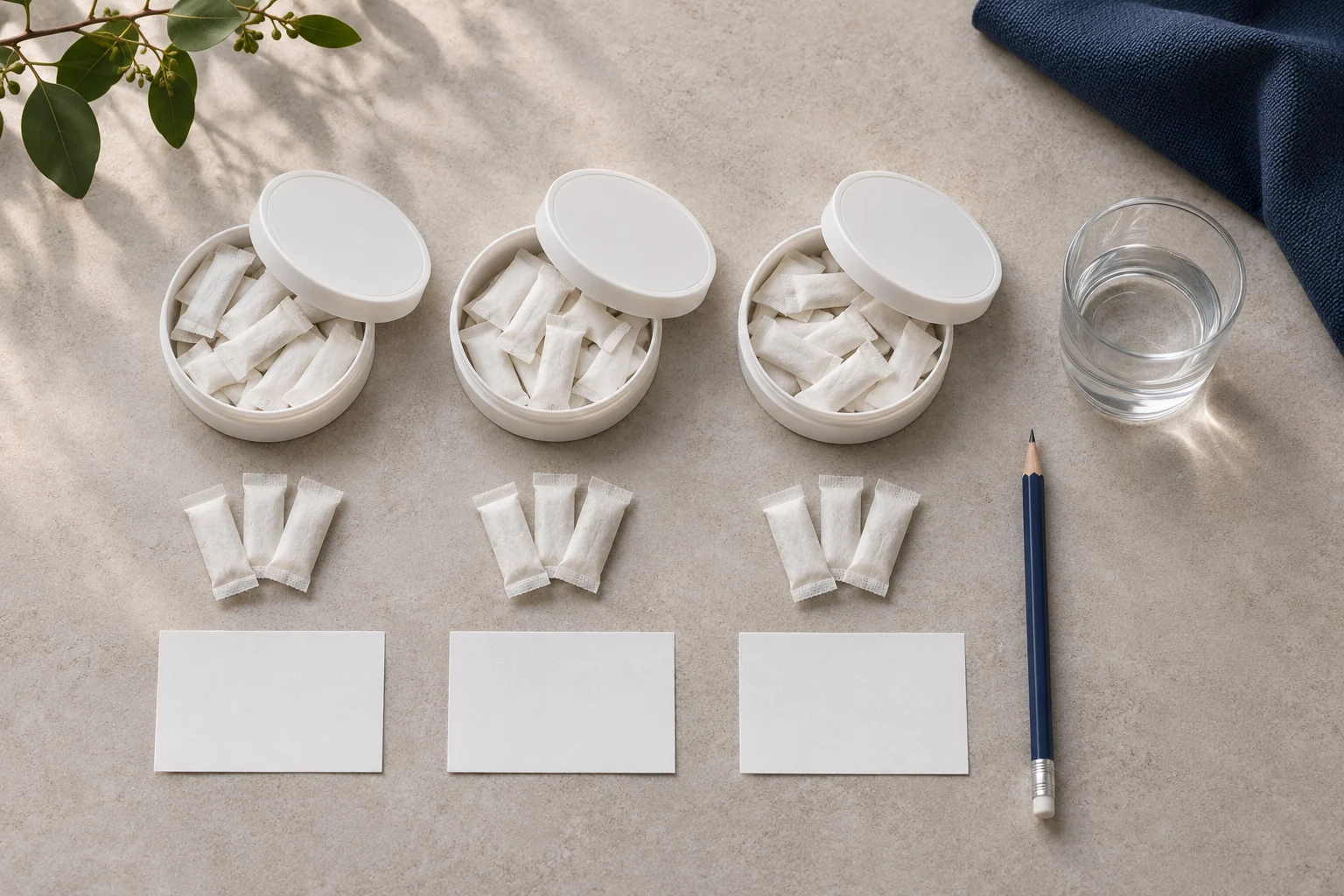
The standard discussed scope covers up to three SKUs and fifteen cans in total at most. Choose samples that test a defined decision, such as two cooling profiles at one caffeine level or two pouch constructions with the same formula. If every variable changes, feedback becomes difficult to interpret.
Record a sample identifier, formula version, can model and observation date. Keep initial aroma, later bitterness, seam feel and any packaging issues separate. The approved sample should connect to the written specification and the production acceptance criteria.
Put commercial arithmetic in the brief
The standard custom caffeine pouch MOQ is 60,000 pouches per flavor/SKU. At twenty pouches per can that converts to 3,000 cans. At sixteen it converts to 3,750 cans, and at fifteen to 4,000 cans. Those are arithmetic conversions; confirm physical capacity and packaging quantities in the order.
Different flavors, formulas or caffeine amounts normally become separate SKUs. Schedule and price follow the approved formula, raw-material availability, artwork and test scope. Request a written quotation that states those assumptions rather than relying on a generic lead-time promise.
A short checklist before sending
Include market, ingredients and amounts, flavor profile, pouch format, moisture, can SKU, fill count, quantity per SKU, artwork status and required tests. State who approves each item and which changes require another sample round. That gives both sides a usable basis for development.
Source note: commercial parameters in this article come from the supplied LINKBIOLABS caffeine pouch product brief and the owner-confirmed 150 mg manufacturing limit. The article does not establish destination approval or a consumer dosing recommendation.